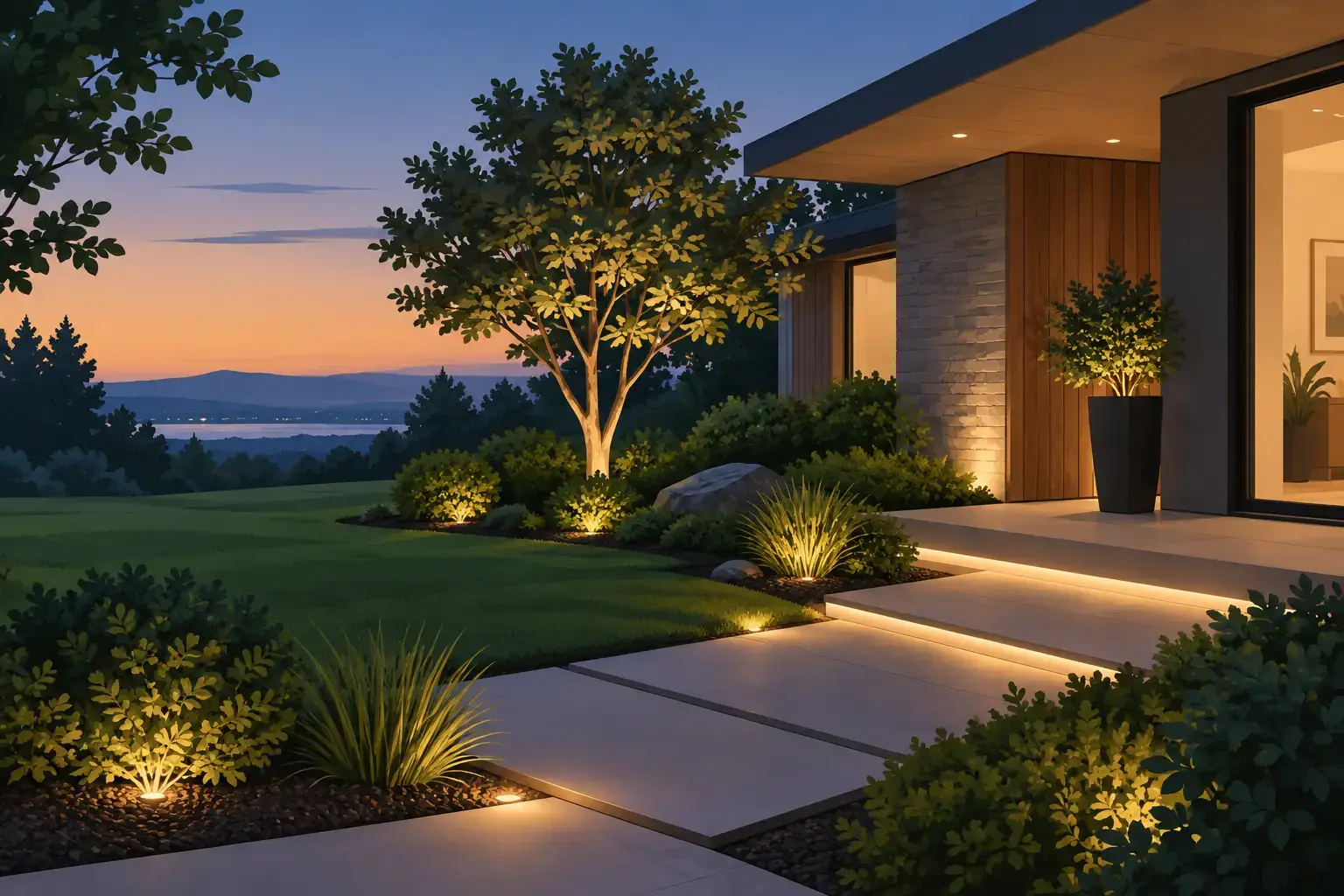
A beautifully finished home can lose its presence after sunset when the entry, walkways, architecture, and planting beds disappear into darkness. Professional outdoor landscape lighting installation gives the property a composed nighttime identity while making everyday arrival, entertaining, and movement around the home more comfortable.
The difference is rarely a matter of adding more fixtures. It comes from intentional placement, thoughtful electrical planning, quality materials, and controls that make the system easy to live with. For a new build or a significant exterior improvement, landscape lighting should be considered part of the home's overall electrical design rather than an afterthought.
Start With How the Property Will Be Used
Every lighting plan should begin with the way homeowners and guests approach and use the exterior. A front walk needs clear, low-glare guidance. Front steps and changes in elevation need reliable visibility. A rear patio may call for a warmer, more layered setting that supports dining without flooding the entire yard with light.
The architecture matters just as much. Stone, brick, stucco, wood, and siding each reflect light differently. A tall façade may benefit from carefully aimed uplighting, while a lower, more detailed elevation may look better with restrained grazing that reveals texture without creating harsh shadows. Mature trees, retaining walls, specimen plantings, water features, and outdoor kitchens can all become part of the composition.
A strong plan separates practical lighting from feature lighting. Path and step fixtures establish safe circulation. Accent fixtures create depth and visual interest. Patio, deck, and gathering-area lighting supports use after dark. When every fixture has a clear purpose, the property feels finished rather than overlit.
Outdoor Landscape Lighting Installation Is an Electrical Project
Landscape lighting is often described as a decorative upgrade, but it relies on infrastructure that needs to be planned and installed with care. The system may include a low-voltage transformer, properly sized conductors, protected connections, weather-rated components, dedicated power, and controls. Larger properties or more complex lighting designs may require multiple zones and more substantial electrical coordination.
Voltage drop is one of the details that separates a polished installation from an inconsistent one. As low-voltage cable runs farther from the transformer, available voltage can decrease. If wire sizing, run length, and fixture load are not calculated correctly, fixtures at the far end of a run may appear dimmer or produce a different color temperature than those closer to the power source.
Professional planning accounts for the total load, the layout of each run, future expansion, and service access. It also considers local code requirements, whether a dedicated circuit is appropriate, and where equipment can be placed discreetly without sacrificing accessibility. This work is especially valuable in new construction, where conduit, outlet locations, grading, hardscape, irrigation, and planting plans can be coordinated before the exterior is complete.
Choose Fixtures for the Setting, Not Just the Catalog
A fixture may look attractive in a product photo yet be poorly suited to its location. Materials, beam spread, mounting method, brightness, and glare control all affect the result. Premium exterior fixtures are built to withstand moisture, heat, cold, irrigation overspray, and routine landscape maintenance, but even a well-made fixture needs to be used in the right place.
Brass and copper fixtures develop a natural patina over time and are often selected for elevated residential projects because they remain durable while aging gracefully. Powder-coated aluminum may be appropriate for certain applications and budgets, provided it is rated for exterior use and installed away from conditions that may accelerate wear. Plastic fixtures can have a place in temporary or limited applications, but they rarely deliver the appearance or service life expected in a refined landscape design.
Light quality deserves the same attention. Warm white lighting typically creates a more inviting residential atmosphere than cooler tones, particularly around stone, wood, and planting areas. Brightness should be selected for the task and setting. A pathway should be visible, not resemble a runway. An uplighted tree should have presence without sending light into neighboring windows or the night sky.
Layer the Lighting Instead of Flooding the Yard
The most common exterior lighting mistake is treating brightness as the goal. Excessive floodlighting flattens the landscape, creates glare, and can make a high-end property feel commercial. A layered design uses contrast deliberately, allowing darker areas to frame the features that deserve attention.
At the entry, a balanced combination of architectural lighting, pathway guidance, and a well-lit address or gate can improve both curb appeal and wayfinding. Along walkways, fixtures should be spaced according to their output and the width of the path, not placed at arbitrary intervals. On stairs, integrated step lighting or carefully positioned side lighting can reveal each tread without shining directly into the user's eyes.
In the backyard, the lighting plan can shift with the space. A pool perimeter, outdoor kitchen, covered porch, fire feature, and garden edge do not need the same light level. The goal is to create usable zones with a sense of depth. Subtle illumination on a perimeter planting bed can make a patio feel more expansive, while focused task lighting near a grill or serving area makes the space more functional.
Build Controls Around Real Life
A system should not require daily attention to perform well. Timers, photocells, dimming, zoning, and smart controls can automate exterior lighting while leaving homeowners in control of the experience. The right approach depends on the property and the household's routine.
A simple system may operate automatically from dusk until a selected evening hour. A more tailored installation may use separate zones for the front elevation, paths, entertaining spaces, pool area, and architectural features. This allows the everyday setting to remain understated while a brighter or more dramatic scene is available for guests, holidays, or late-night use.
Smart-home integration can be particularly valuable for custom homes and major renovations. Homeowners may want exterior lighting tied to an app, wall keypad, whole-home scenes, or security routines. The best systems still provide intuitive physical control, because a well-designed home should remain easy to operate for family members, guests, and service professionals.
Coordinate Early With Other Exterior Work
Landscape lighting is easiest to execute well when it is coordinated before hardscape and planting are finalized. A lighting contractor may need to account for pavers, retaining walls, irrigation lines, drainage, landscape beds, gates, decks, and future planting growth. Waiting until every surface is complete can limit fixture placement and create unnecessary disruption.
That does not mean an existing property cannot be upgraded. Retrofit installations can be highly effective, especially when the work begins with a site review and a clear understanding of the home's electrical capacity. The scope may need to adapt to existing conditions, but thoughtful design can still produce a substantial improvement without reconstructing the landscape.
For builders, architects, and general contractors, early coordination protects the design intent. It avoids the familiar problem of installing a beautiful stone wall or mature planting bed only to discover later that no practical path remains for wiring or fixture mounting. MJI & Sons Electric approaches these decisions as part of a coordinated residential electrical plan, with attention to both the finished appearance and long-term performance.
Plan for Maintenance Without Sacrificing Appearance
Even premium systems need occasional care. Fixtures can shift with freeze-thaw cycles, soil movement, or landscaping activity. Plant growth can block a beam that was perfectly aimed at installation. Lenses may need cleaning, and timers or smart settings may need seasonal adjustment.
A professional installation makes this maintenance manageable. Connections should be protected and accessible, transformers should be located where they can be serviced, and fixtures should be positioned with realistic landscape growth in mind. Homeowners should also know where controls are located and how to adjust basic settings without disturbing the overall design.
The right outdoor lighting does more than make a home visible at night. It extends the use of the property, brings intention to the architecture, and gives every arrival a better first impression. When the installation is planned as carefully as the home itself, the result feels less like added equipment and more like a natural part of the landscape.